:max_bytes(150000):strip_icc()/ficus-tineke-growing-guide-5270992-hero-29f28c12b44d433fa350f34a1b00af3a.jpg?ssl=1 "Ficus Elastica Variegata")
The Striking Beauty of Ficus Elastica Variegata: A Comprehensive Guide
The Ficus elastica variegata, a captivating cultivar of the popular Rubber plant, stands out with its striking variegated foliage. Its glossy leaves, adorned with splashes of cream, yellow, or even pink against a deep green backdrop, bring a touch of tropical elegance to any indoor space. More than just a visually appealing plant, the Ficus elastica variegata boasts a rich history and a set of characteristics that make it both a desirable and relatively easy-to-care-for houseplant.
This comprehensive guide will delve into the fascinating world of the Ficus elastica variegata, exploring its origins, unique features, diverse varieties, and providing detailed insights into its care and propagation. Whether you’re a seasoned plant enthusiast or a curious beginner, this article will equip you with the knowledge to appreciate and successfully cultivate this stunning plant.
Unveiling the Origins: From Rainforest to Homes
The Ficus elastica, the parent species of the variegated variety, originates from the tropical rainforests of Southeast Asia, including regions like India, Malaysia, and Indonesia. In its native habitat, it can grow into a massive tree, reaching heights of up to 100 feet. The “elastica” in its name refers to the milky latex sap it produces, which was historically used for rubber production, though this is no longer a primary use.
:max_bytes(150000):strip_icc()/ficus-tineke-growing-guide-5270992-hero-29f28c12b44d433fa350f34a1b00af3a.jpg "image.title")
The variegated forms of Ficus elastica are cultivars, meaning they were specifically bred for their unique color patterns. These variations likely arose as natural mutations that were then selected and propagated for their aesthetic appeal. The exact history of when and where the first variegated Rubber Plants emerged is not precisely documented, but they gained popularity as houseplants in the latter half of the 20th century, prized for their ornamental value.
Distinctive Features: A Visual Delight
The most defining characteristic of the Ficus elastica variegata is, undoubtedly, its stunning foliage. Here’s a closer look at what makes it so visually captivating:
Large, Leathery Leaves: Like its parent plant, the variegated Rubber Plant features large, oval-shaped leaves that can grow up to 12 inches long. These leaves have a thick, leathery texture, giving them a substantial and glossy appearance.
A Spectrum of Varieties: Exploring the Colors
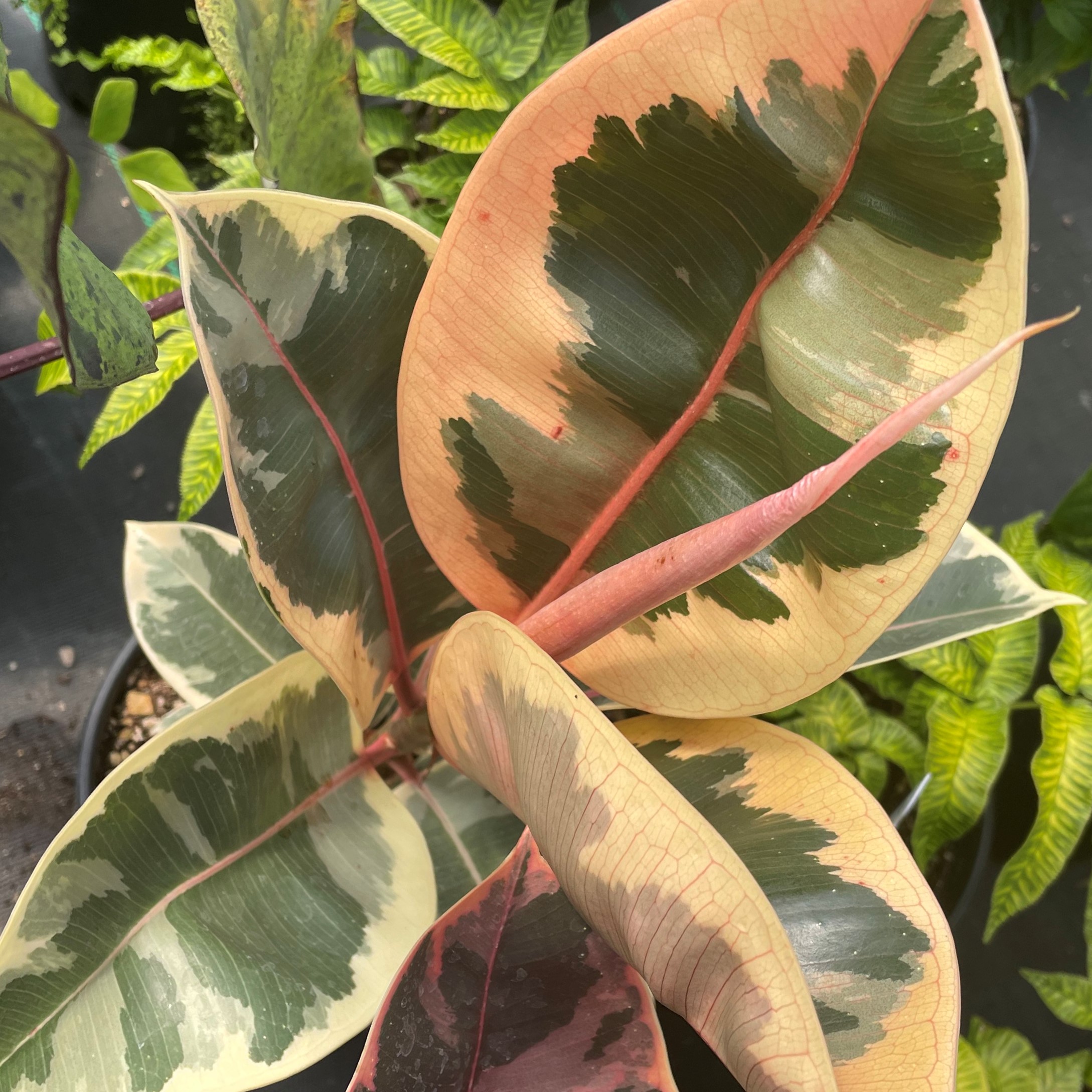
The beauty of Ficus elastica variegata lies not just in its variegation, but also in the different expressions of this trait across various cultivars. Here are some of the most popular and sought-after varieties:
Ficus elastica ‘Tineke’
One of the most common and beloved varieties, ‘Tineke’ features creamy white or light yellow variegation along the edges of its dark green leaves. The contrast is striking and relatively stable, making it a popular choice for beginners.
Ficus elastica ‘Ruby’
‘Ruby’ is known for its vibrant pink variegation, often appearing on new growth. The older leaves tend to have a mix of green and cream, while the emerging leaves showcase stunning shades of pink and red. This variety offers a particularly colorful display.
Ficus elastica ‘Belize’
‘Belize’ is similar to ‘Ruby’ but often displays a more intense and consistent pink or burgundy variegation, sometimes with hints of cream. Its colors can be quite vivid, making it a standout specimen.
Ficus elastica ‘Shivereana’
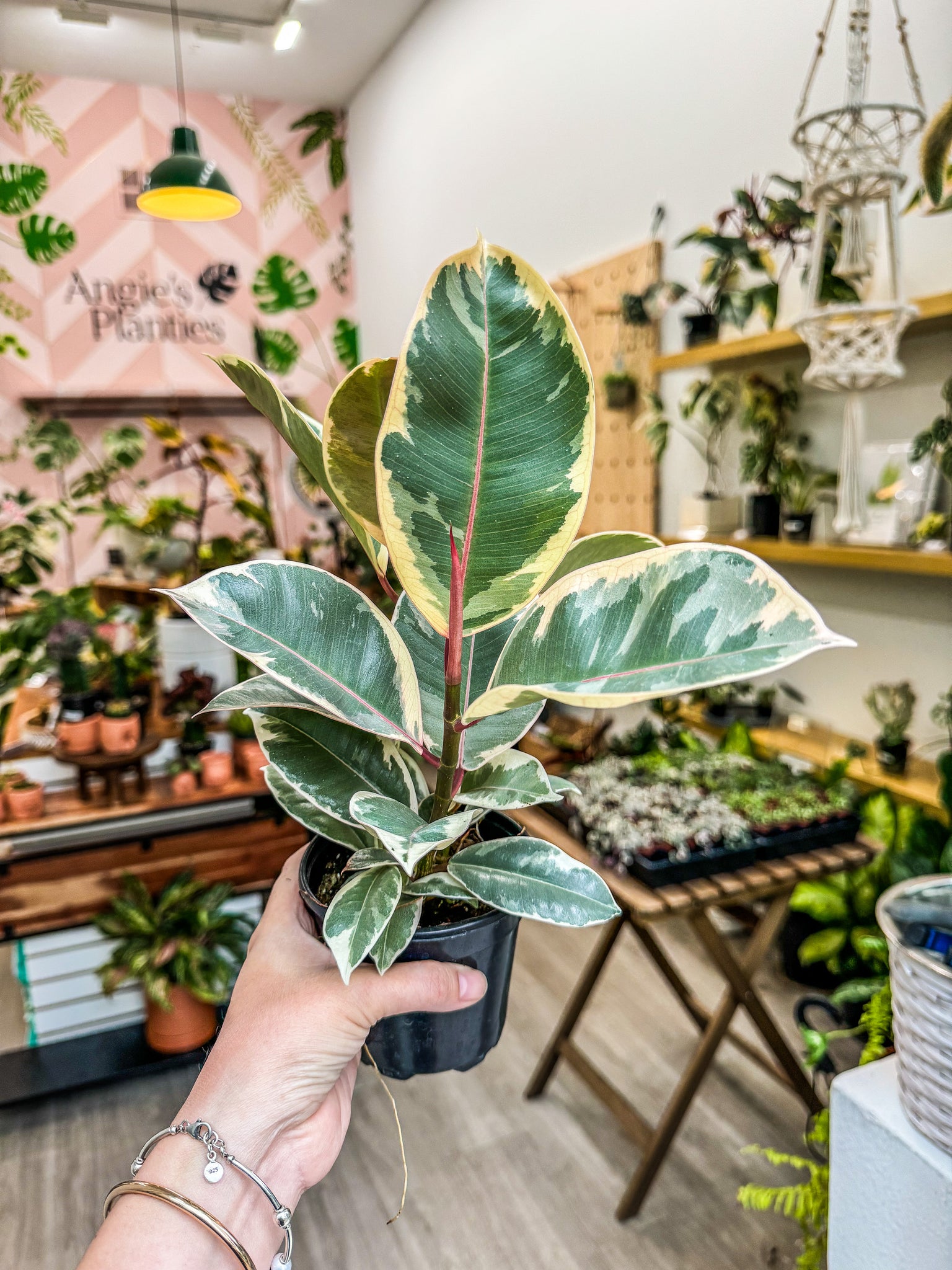
This newer variety is highly sought after for its unique and almost watercolor-like variegation. The leaves exhibit a blend of light green, creamy yellow, and sometimes pink, creating a soft and artistic appearance. The variegation patterns can be highly variable and often feature speckled or marbled effects.
Ficus elastica ‘Doescheri’
‘Doescheri’ boasts a more subtle variegation pattern with irregular streaks and patches of light green or gray-green against a darker green background. It offers a more muted and sophisticated look compared to the more boldly colored varieties.
Ficus elastica ‘Melany’ Variegated
While ‘Melany’ is typically known for its compact, dark green leaves, a variegated version exists, showcasing splashes of lighter green or cream. This variety maintains the smaller leaf size of ‘Melany’ while adding the visual interest of variegation.
Caring for Your Variegated Rubber Plant: A Guide to Thriving
While Ficus elastica variegata is generally considered a relatively low-maintenance plant, providing the right care is crucial for its health and the vibrancy of its variegation. Here’s a detailed guide to ensure your plant flourishes:
Light
Variegated plants need bright, indirect light to maintain their distinct color patterns. Insufficient light can cause the variegation to fade, and the plant may revert to solid green leaves.
Water
Proper watering is essential to prevent root rot, a common issue with Rubber Plants.
Humidity
Ficus elastica variegata appreciates higher humidity levels, mimicking its tropical origins.
Temperature
Ficus elastica variegata thrives in typical indoor temperatures.
Soil
A well-draining potting mix is crucial for healthy root development.
Fertilizer
Regular fertilization during the growing season (spring and summer) will support healthy growth and vibrant variegation.
Pruning
Pruning can help maintain the plant’s shape, encourage bushier growth, and remove any dead or damaged leaves.
Cleaning Leaves
Dust can accumulate on the large leaves, hindering photosynthesis.
Propagation: Expanding Your Collection
Propagating Ficus elastica variegata allows you to create new plants and share its beauty. The most common methods are stem cuttings and air layering.
Stem Cuttings
Timing: Spring or early summer is the best time to take cuttings.
Air Layering
Air layering is a method of rooting a stem while it’s still attached to the parent plant.
Common Problems and Solutions
While generally resilient, Ficus elastica variegata can encounter some common issues. Here’s how to address them:
Leaf Drop: This can be caused by various factors, including sudden changes in temperature, overwatering, underwatering, low light, or drafts. Identify the cause and adjust your care accordingly.
Toxicity
It’s important to note that Ficus elastica variegata is toxic to cats and dogs if ingested. The milky sap can cause oral irritation, vomiting, and diarrhea. Keep the plant out of reach of pets and children.
Conclusion: Embracing the Variegated Beauty
The Ficus elastica variegata is more than just a houseplant; it’s a living piece of art that brings a touch of the tropics indoors. Its striking variegated foliage, combined with its relatively easy care requirements, makes it a popular choice for plant lovers of all levels. By understanding its needs and providing the right environment, you can enjoy the beauty and elegance of this remarkable plant for years to come. Whether you choose the classic ‘Tineke’, the vibrant ‘Ruby’, or the unique ‘Shivereana’, the Ficus elastica variegata is sure to be a stunning addition to your plant collection.
ficus elastica variegata